Donate



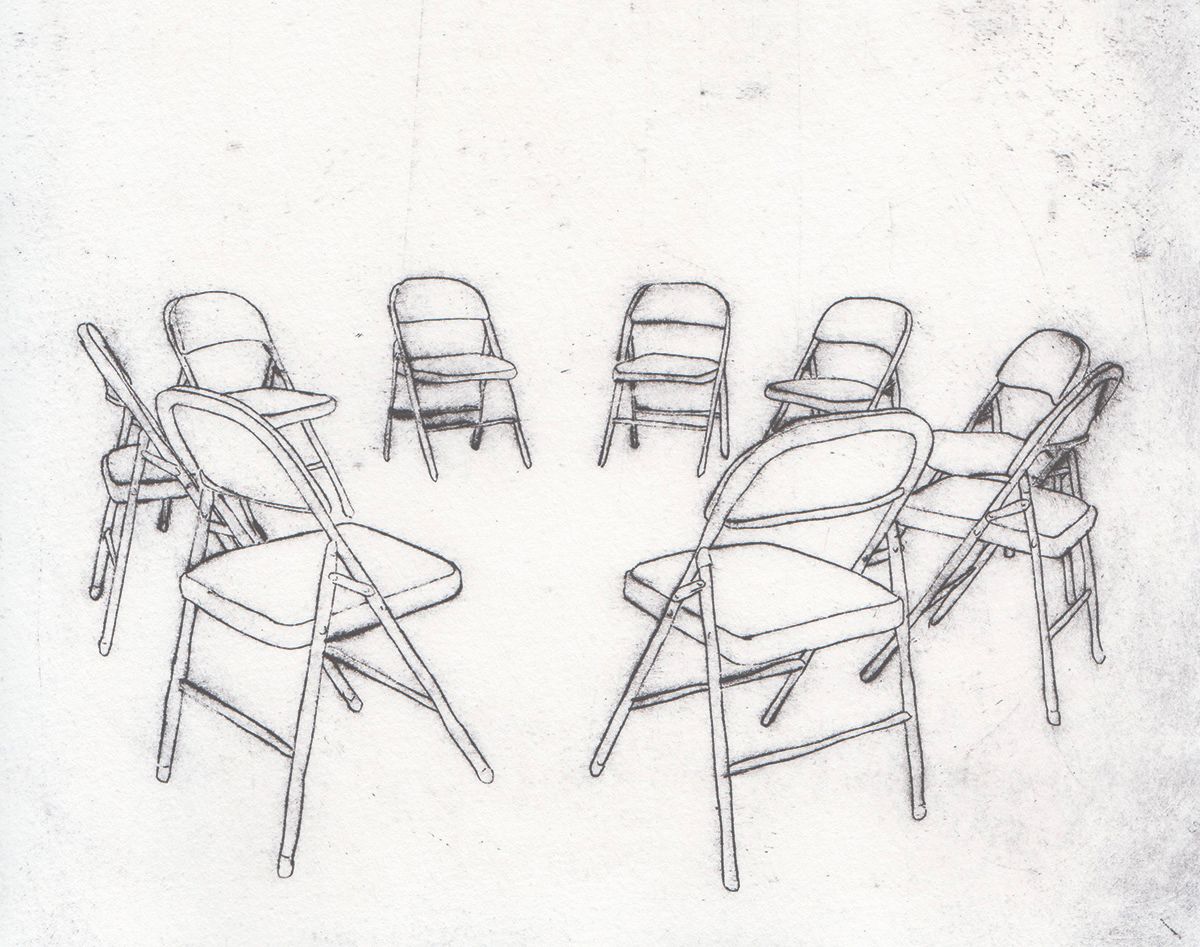
It has been a decade since I connected emotionally with the climate crisis and the interconnected Earth systems. Since then, I’ve experienced a constant search for peace. Peace in terms of my mindset. How do I lessen my feelings of anxiety and climate grief? Peace in terms of my purpose. How do I do enough? Peace in terms of my relationships. How do I get other people to understand? My search for peace drove me to change my career but I still felt isolated. I was carrying the weight of climate breakdown on my shoulders, but I wasn’t bringing people with me.
Over the years, I’ve ticked off a long list of things I felt I ‘should’ do. I was making life decisions based on the question, ‘Will this save the planet?’ I stopped eating meat, I stopped flying, I stopped driving unnecessarily, I installed solar panels. I wanted other people to do the same, but found myself feeling increasingly frustrated that they just looked on with indifference – perhaps even pity. This drove feelings of hopelessness because it seemed as if nothing I could do would make enough of a difference. I realise now that I was sacrificing my joy in the present. It was hardly the best advert for how to live.
At New Year 2020 I made a resolution to litter-pick my local area in Buckinghamshire, UK. I posted in a residents’ group asking if anyone would like to join me. Ten strangers turned up. It was my first taste of community and connecting with other people who care. That day a seed was planted. I started to realise that the act of coming together with other people was missing from my life and my actions.
At around the same time, a colleague mentioned that they wished they knew more about the climate crisis. As a hobby, I’d compiled an enormous slide deck containing everything I knew. Perhaps I could invite a few people round to my house to talk it through, I thought. Imposter syndrome nearly stopped me, but I emailed the ‘all staff’ address and received eight replies from people saying they were interested. The first iteration of what would later become Climate Club took place in my lounge. It was informal and friendly. But did I have the courage to do this with strangers?
I’m an introvert, a perfectionist and a self-critic. Suffice to say, I had everything I needed to avoid putting myself out there. It took me a year of searching deep inside to realise that I would never know unless I tried. That search led me to create Climate Club in 2025: an eight-week community programme where people would meet weekly to explore the climate crisis, their own responses to it, and the many ways we can act together.
I created a website and launched it, posting on local Facebook groups and handing out flyers at events. Within six weeks, 20 people had signed up. We found a venue, and Climate Club ran weekly from January 2026, with more time for reflection, discussion and holding emotions. It didn’t always go to plan, but I could see the energy building, the connections growing, the sense of agency rising as we explored science, psychology, joy, grief, solutions, actions and intention. The feedback was wonderful. People had enjoyed the opportunity to pay attention, to discuss, to have someone hold the space in a way that felt honest, non-judgemental and inclusive.
I ran Climate Club from June to July 2026 with another 25 people and I will have completed my third cohort for 2026 by December. That’s 70 people who have engaged intensively with the programme. Climate Club is free to attend but I was unsure about asking people to commit for eight weeks at a time. I’m encouraged that each cohort has been full and that almost no-one has dropped out. It’s early days, but it feels like something important.
I’ve learnt that one conversation with a real person is better than a hundred comments online, and that individual actions are important but bringing people together creates deeper meaning. I’ve learnt that climate anxiety and joy can co-exist – they are both valid ways to respond to this beautiful world. I am learning that recognising our own skills, whatever they are, and using them to inspire others is a great way to find purpose. Lighting my own candle helps dispel my gloom but also attracts others who become empowered to light their own candles, in their own ways. But most of all it has taught me that it’s okay to feel scared while trying something new.
Climate Club has shown me that there are many people who want to talk about the climate crisis but need space from their busy lives to do so. They need somewhere to explore issues without judgement, without having all the answers and without being told what they should do. They enjoy making sense of the complexity together, connecting global issues with their everyday lives and discovering that they are not alone in their questions.
When it first started, I thought I was offering knowledge. I now realise I am offering something much more valuable – permission to pause. Each week, people step outside the demands of work, parenting and everyday life to reflect on how they want to live in these extraordinary times. Again and again, participants tell me how energised they become through simply having the time and space to pay attention.
Climate Club has also changed my understanding of climate action itself. We often imagine engagement as persuading strangers online or changing minds through better knowledge. My experience has been that real change begins much closer to home – in conversations with neighbours and colleagues, in communities where trust can be built. We are far more likely to inspire action through relationships than through fear and outrage.
Looking back, I realise I was trying to save the world alone. Instead, now I’m creating a community that is changing something in me. My climate anxiety has not disappeared, nor should it. Grief remains a reasonable response to what we are witnessing, but joy, purpose and connection now sit firmly alongside it. Perhaps the most important lesson has been that everyone is on their own journey. For one attendee, planting wild flowers is their first meaningful step. For others, standing in local elections feels right. Both matter. Climate Club doesn’t tell people what they should do. Instead, it invites us to take the next step, whatever that looks like for each of us.
Individual actions matter, but when we begin encouraging one another, something larger starts to emerge. History shows us that lasting change is created collectively, and I have never been more hopeful than when I see attendees together, discovering that they care, and realising that they are not alone.
If there isn’t already a space like this where you live, perhaps the question isn’t whether someone should create one. Perhaps it’s whether that someone might be you.