Donate


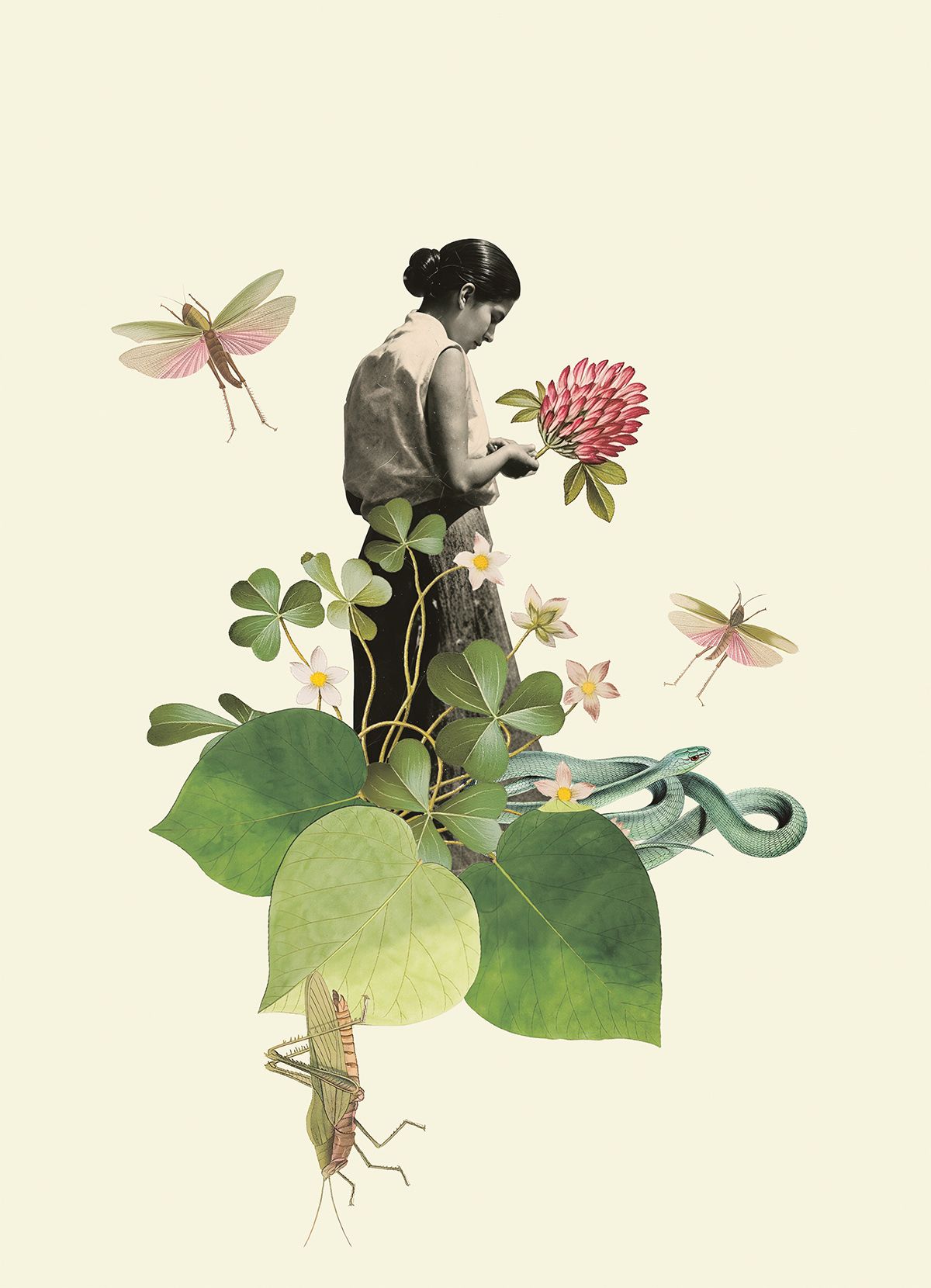
What might change if our language began to reflect a more entangled relationship with the living world – one that is more relational, perhaps even guided by affection?
In May 1966, the first issue of Resurgence was published. That’s 60 years of stories and 60 years of asking how we might live more gently and more attentively within the living world. Across those years, the words we use – and the ways we use them – have helped to shape that asking.
When commissioning writers for this magazine, I invited them, where possible, to avoid using the word Nature altogether. In her introduction to the themed section, gardener and writer Sui Searle writes: “The story of separation runs through our culture: that humans stand outside and above this thing we call Nature. Nature as object, as noun – distinct from us: something to be used in our service.”
Much of our language carries this inheritance. Words shape the stories we tell, and stories shape how we live our lives. The poet and writer Sophie Strand says she doesn’t like to work by banishing words “by subtraction” and instead likes to “add enough on top of them that they meld and rot and grow something new”. Language, after all, is never fixed. In late Middle English, the word nature could also appear as a verb. To nature something was to bring it forth, to foster its growth, to nurture and sustain life. Perhaps the question, then, is how such shifts in language might shape the stories we tell today.
Satish Kumar likes to write his features well in advance, and when I was recently in the Hartland office, he sidled up to me and said that he’d finished writing his article and would send it over soon.
I asked if he’d used the word Nature.
“Yes,” he said. “Lots.”
I told him about the plan for this issue, and without missing a beat he said that he’d rewrite his piece. So the invitation to readers is this: how much do we need to rewrite our own texts? How much do we need to change the stories that we tell about the world – and about our place within it? And what might happen if, like the writers in these pages, we allowed our language to grow a little wilder?
Elsewhere in these pages, among the other features and reviews, Tori Tsui reflects on the teachers who have nurtured her understanding of life and belonging, Elena Landinez imagines new ecosystems and possible worlds, and Satish celebrates diversity while reminding us of the unity that underlies it.
As always, we’d love to hear your thoughts. This magazine is part of an ongoing conversation that continues to grow and evolve with each issue. You can write to us at [email protected]