Donate


Unexpected pollinators
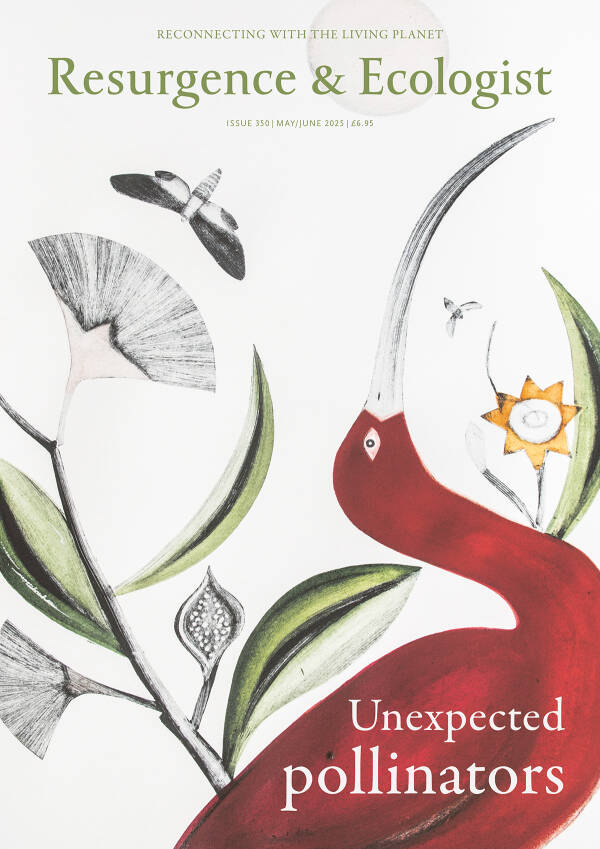
In this issue we celebrate pollinators – and not just the ones you would expect us to include. Bees and butterflies, of course, but slugs and snails and mice and bats and lizards and beetles are important pollinators too. As are wind and water.
We extend the idea of ‘Unexpected Pollinators’ to introduce people who are working to encourage others to champion the natural world and recognise what we stand to lose if we don’t all work to protect our planet.
You will meet Dax Dasilva, a Canadian Tech entrepreneur working with Jane Goodall to help protect Indigenous wisdom in the Amazon, and influencer Lydia Millen, who uses her high fashion platform to share her love of gardening and bees. Both unexpected pollinators and, perhaps, equally unexpected champions of the natural world.
In our Slow Read, psychiatrist Iain McGilchrist explains why we must strive to be worthy of trust – the single quality that he believes will steer us out of the mega-crises we face together, and in our Art & Culture section, writer Lucy Shrimpton visits Fenix, the new museum of human migration in Rotterdam.
Our special theme is a celebration of many facets of pollination – from Anisha Jaya Minocha’s reflection on her experience of bhramari (yoga’s calming bee breath) to an artist’s statement from Freddie Yauner who paints with pollen to highlight the plight of pollinators.
We offer a though-provoking issue with something for everyone and plenty to get you thinking about the way you too can be a pollinator and champion of right thinking and thus, of the natural world.
Highlights
- We must strive to be worthy of trust: Iain McGilchrist
- Nature’s Big Tech Champion: Susan Clark interviews Dax Dasilva
- Introducing the Beetle Lady: Katie Dancey-Downs interviews M.G. Leonard
- Pollinators and scent: Simon Constantine
- Nerves of steel: J. P. O’Malley
Featured articles
Queering conservation
Freelance educator and conservation forester Kara Moses explores heteronormativity in conservation practice. “As queer ecology gains more traction and awareness … the list of species recognised as practising same-sex sexual behaviour is ever growing.”
Read more...
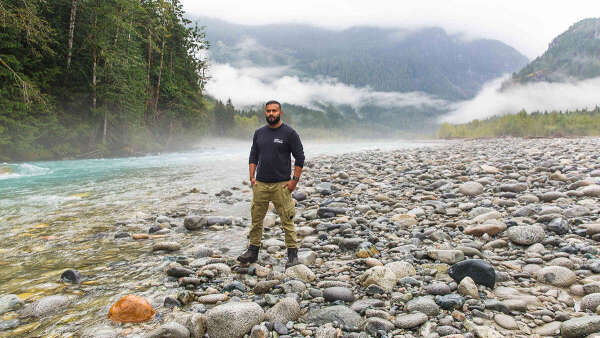
Nature's Big Tech Champion
Susan Clark interviews tech entrepreneur Dax Dasilva, who is using his credentials as an unexpected environmentalist to support those frontline Indigenous communities whose knowledge is key to understanding what we have lost and what we might still lose.
Read more...
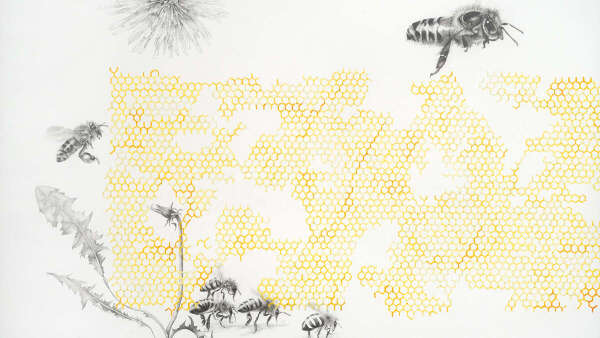
In the breath of a bee
Anisha Jaya Minocha shares a very personal bee-related exploration of sound and scripture, and offers a deeply felt message about our living connection with creation. “Breathwork reverberates through noticing this subtle essence, where sound reveals the oneness in all.”
Read more...
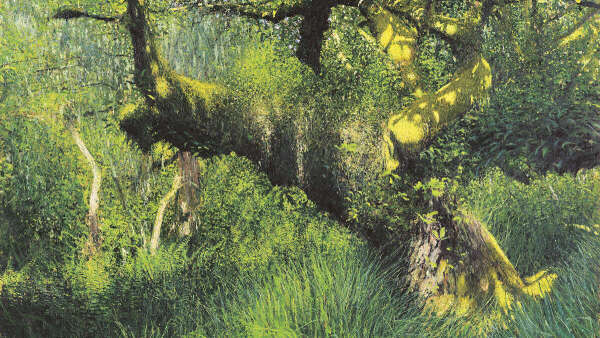
Defining and renovating our forests
Lauren E. Oakes explores the history of our forests and discusses what their vital role in our future could look like. She explains that repairing Nature need not come at the expense of other land users but does require a shift in mindset.
Read more...

Tuning in to the Earth
Evolutionary guide, Padma Aon Prakasha uses his knowledge of ancient wisdom to explore the power of Earth frequency, and explains how to find it within us. “Earth within and Earth without is full of compassion, kindness, generosity and love.”
Read more...
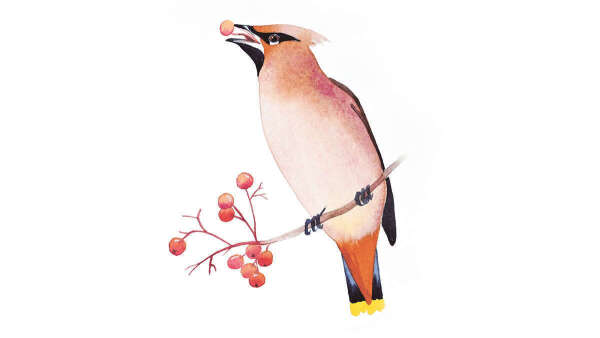
Learning from how Nature shares harvests
Holly Rose reviews The Serviceberry: An Economy of Gifts and Abundance by Robin Wall Kimmerer, and asks whether the slow, people-led ethos of gift economies is radical enough. Could it be a balm for our times?
Read more...
Picture Credits
Cover image: Mangrove by Beatrice Forshall; Queering conservation: Queer Ecology by Mary Tremonte; Nature’s Big Tech Champion: Dax Dasilva in the Pitt River Watershed, BC © Alan Katowitz; In the breath of a bee: Bee 27 (Drone Comb), 2011 by Rebecca Clark; Defining and renovating our forests: Wistman's Wood by Andrew Gifford; Tuning in to the Earth: Nature's assurance by Rachel Grant; Learning from how Nature shares harvests: Detail from A museum of Bohemian waxwings by Jane Tomlinson
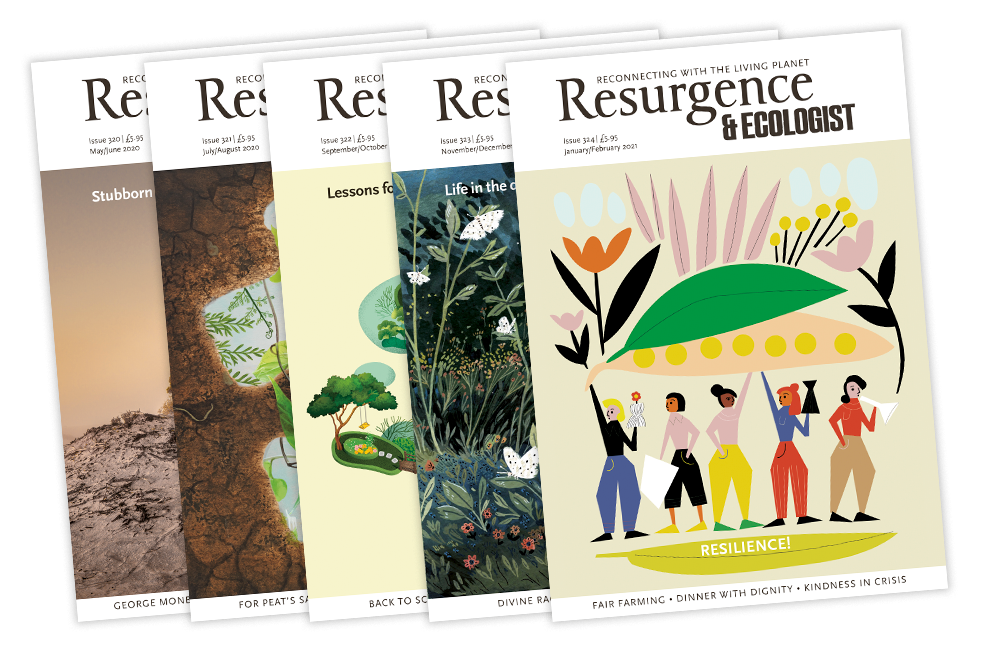
Membership Includes:
6 issues of Resurgence & Ecologist magazine a year
Access to:
• Articles online • Digital Editions • Archive issues
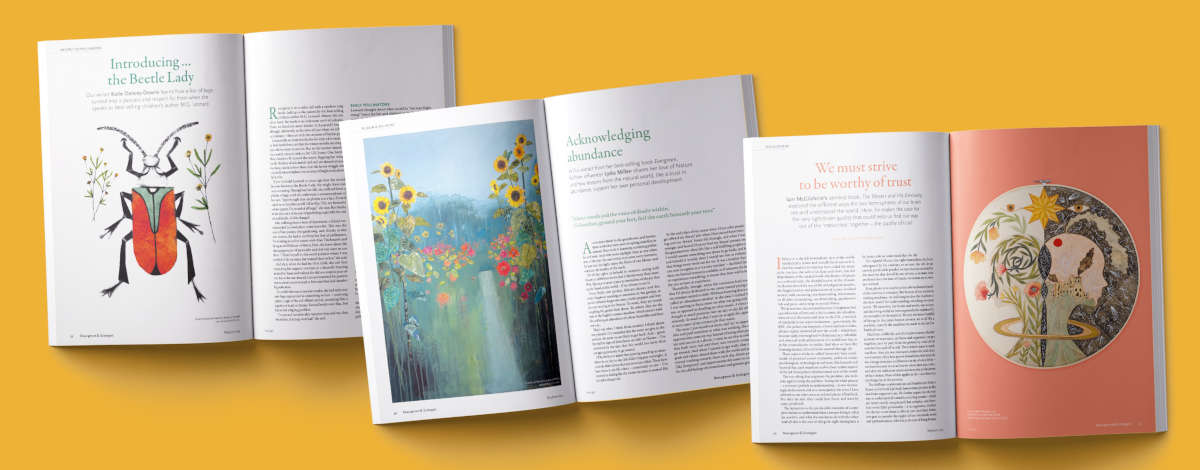
Inside this issue
Article is free for all to view
Welcome
Unsung heroes • Susan Clark
Bats, mice, lizards, slugs, snails, fish, beetles, spiders, frogs, crabs, ants, moths, woodlice, tortoises, snakes, earwigs, wind, water and… humans
Regulars
Noticeboard
Highlighting stories for change
Ecologist
Queering conservation • Kara Moses
On the downsides of heteronormativity
The return of the red kite • Roman Goergen
Reporting on a conservation success story
Connected life
Nature's Big Tech Champion • Susan Clark
An interview with entrepreneur and environmentalist Dax Dasilva
Rooted innovation • Martha Dillon
Meeting changemaker Joycelyn Longdon
It all starts with seeds • Adam Alexander
A short extract from The Accidental Seed Heroes
The slow read
We must strive to be worthy of trust • Iain McGilchrist
Making the case for the right-brain quality that could help us out of the 'metacrisis' together
Unexpected pollinators
Bees: a guide for the curious • Susan Clark
Introducing a new Nature series of books
Introducing… the Beetle Lady • Katie Dancey-Downs
Katie Dancey-Downs interviews M.G. Leonard
In the breath of a bee • Anisha Jaya Minocha
A personal reflection
Pollinators and scent • Simon Constantine
Investigating the role of scent in communication
Wisdom and wellbeing
Acknowledging abundance • Lydia Millen
Summer is all about trust in the bounty of the natural world
Defining and renovating our forests • Lauren E Oakes
Exploring the history of our woodlands
Tuning in to the Earth • Padma Aon Prakasha
On the power of Earth's frequency
Wild enchantments • Nathaniel Hughes
Remembering how a plant first 'pollinated' him
Art and culture
Stories of human movement • Lucy Shrimpton
Reflecting on a visit to Fenix, Rotterdam's new museum of migration
How language shapes our relationship with the natural world • Rachel Marsh & Briony Hughes
Sharing the work of poet Isabel Galleymore
Nerves of steel • J P O'Malley
Meeting the documentarians behind a film about one of Europe's most polluted cities
Art for your oceans • Laura Culpan & Susie Allen
The curators of Artwise explain their latest project with WWF
Reviews
Nature writing that allows Nature to speak • Adam Weymouth
Review of Is A River Alive?
Learning from how Nature shares harvests • Holly Rose
Review of The Serviceberry: An Economy of Gifts and Abundance
Choosing stewardship of our food system • Rashi Goel
Review of The Nature of Nature: The Metabolic Disorder of Climate Change
It’s a question of equity and better balance • Mark Cocker
Review of Just Earth: How a Fairer World Will Save the Planet
Where should we direct our action? • Russell Warfield
Review of Climate Radicals: Why Our Environmental Politics Isn’t Working
The case for coexistence • Tiffany Francis-Baker
Review of The Wolf Within
Reimagining a flourishing future • Edward Davey
Review of Transformative Adaptation: Another World Is Still Just Possible